
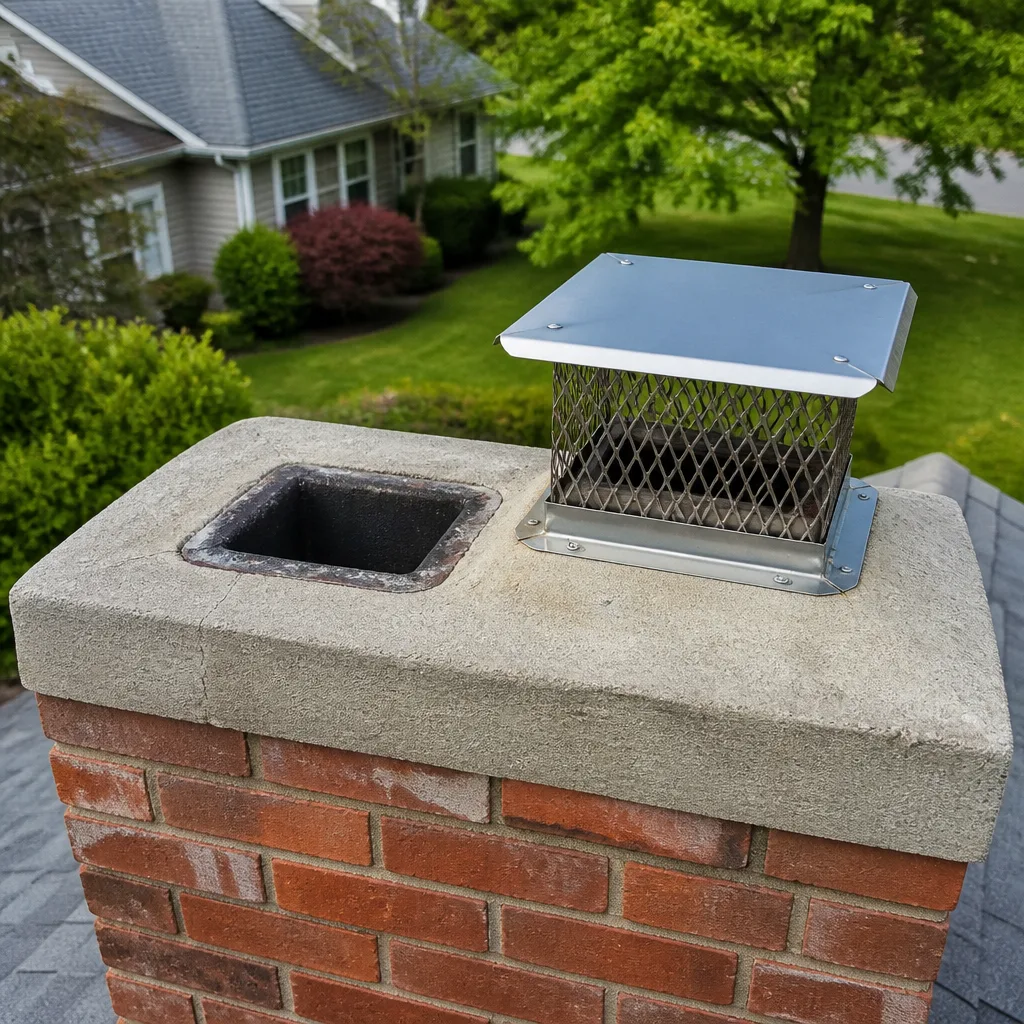
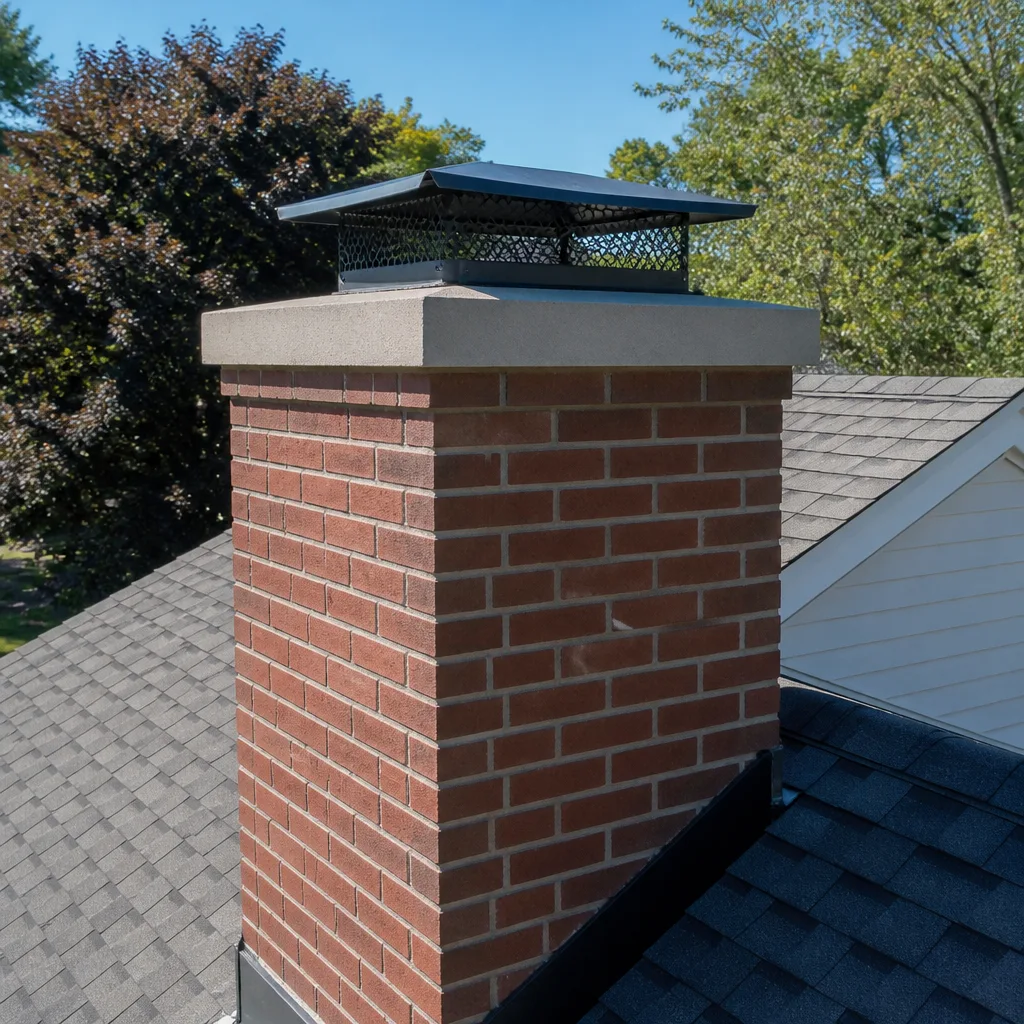
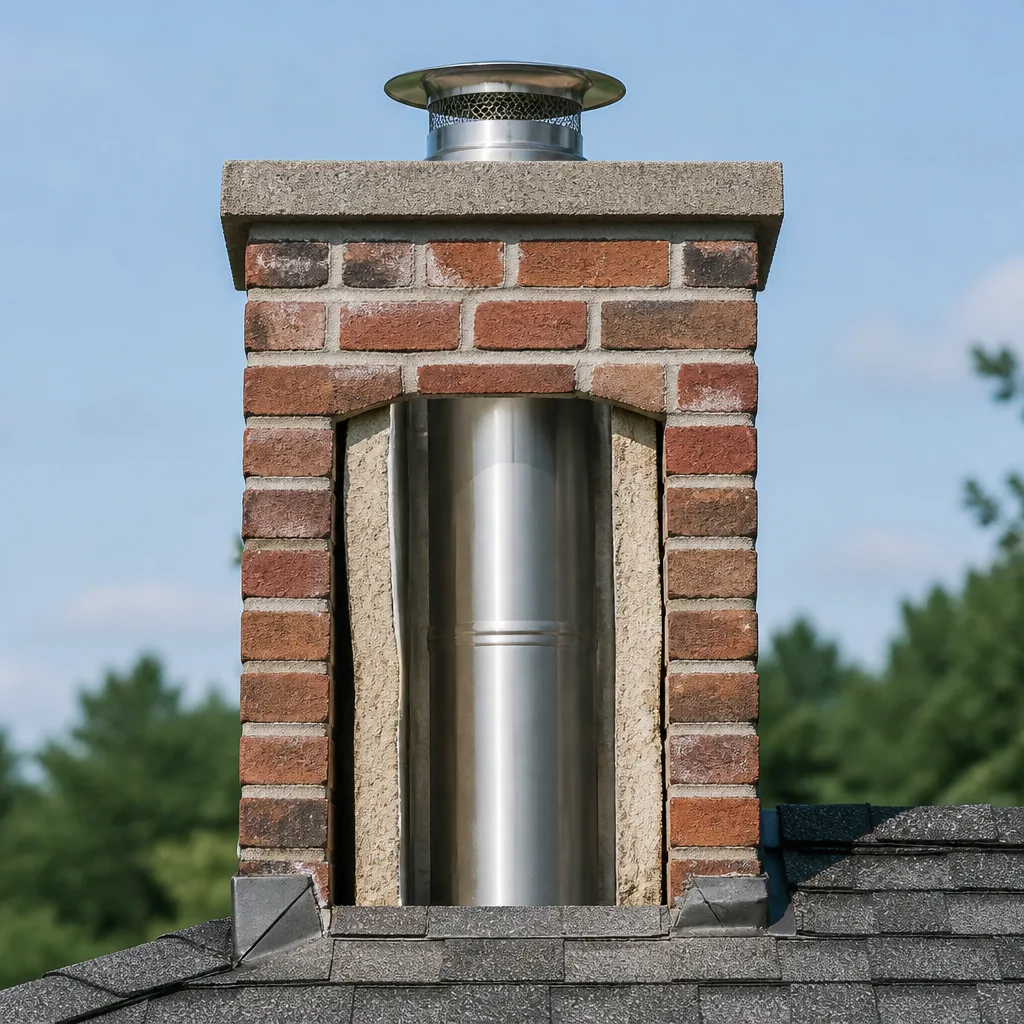
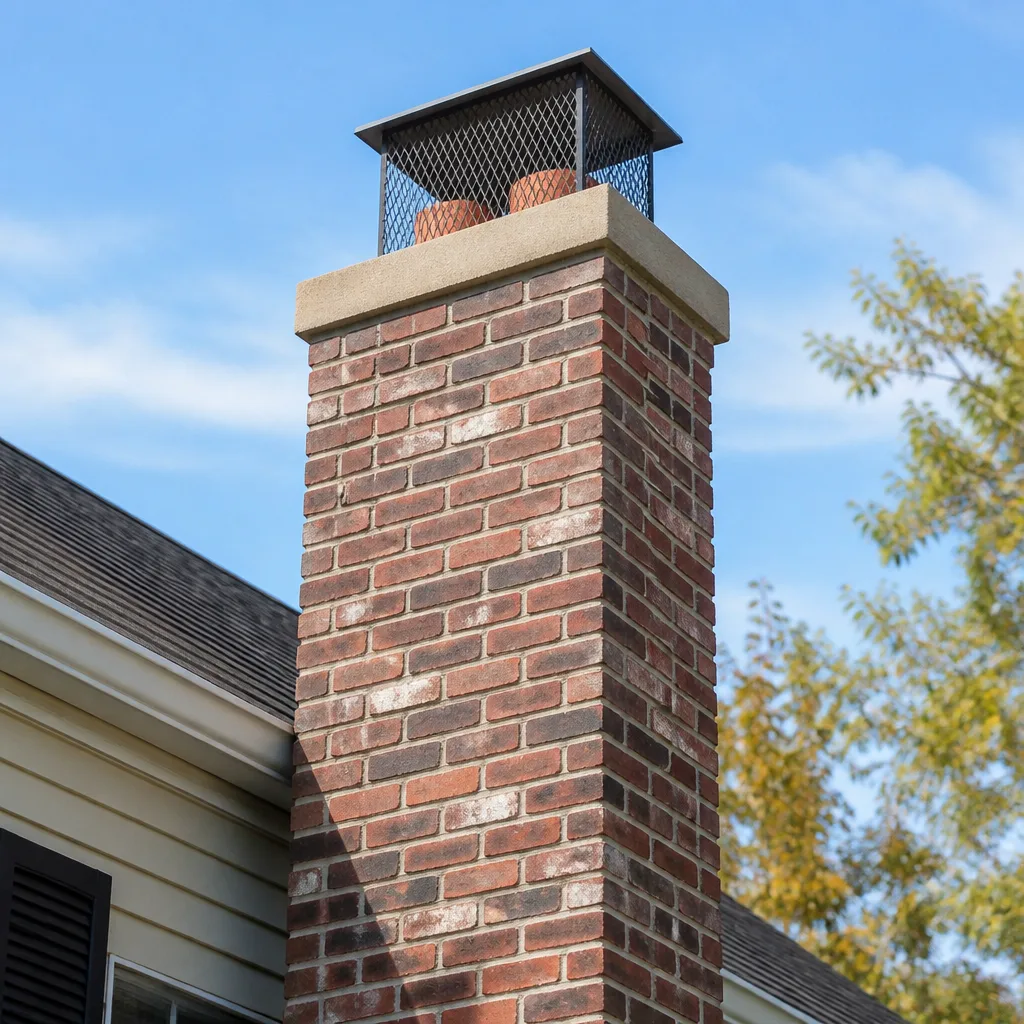
 Before
 After
After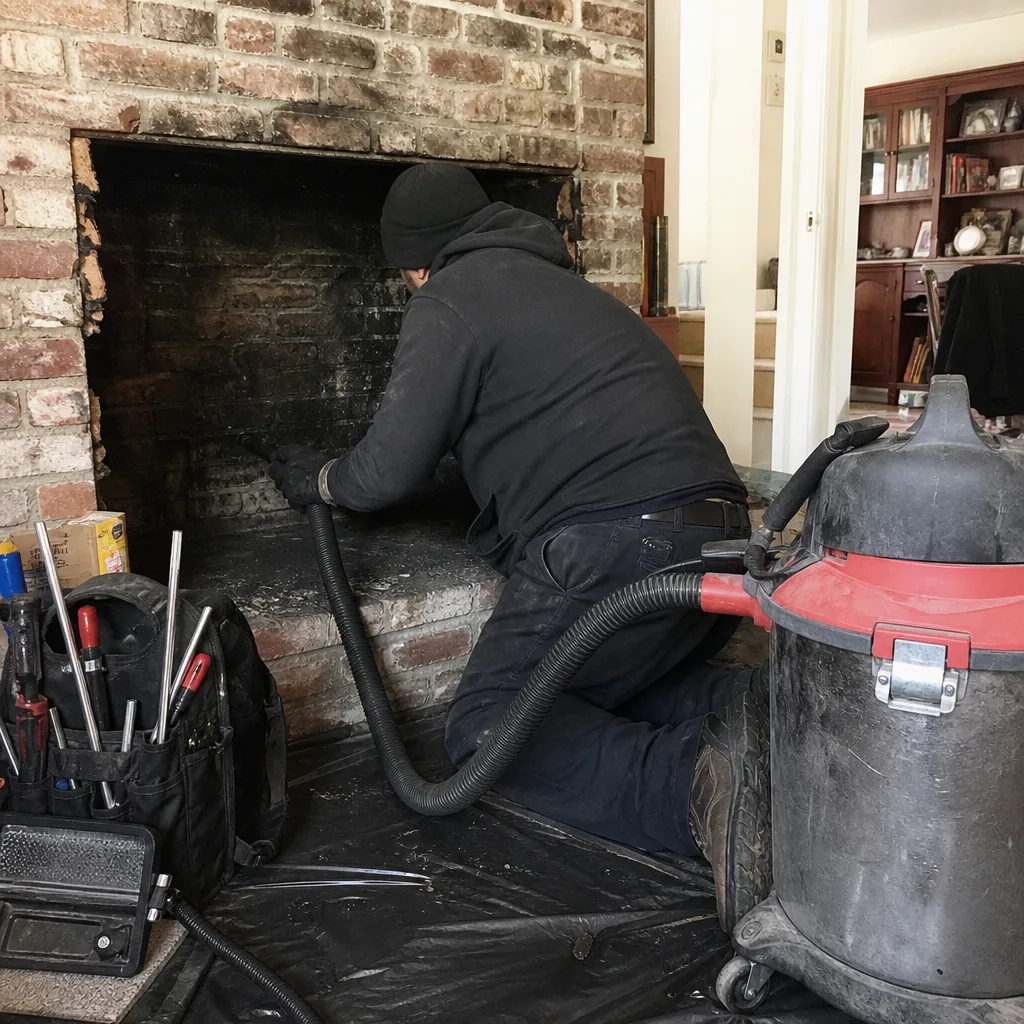 Before
 After
After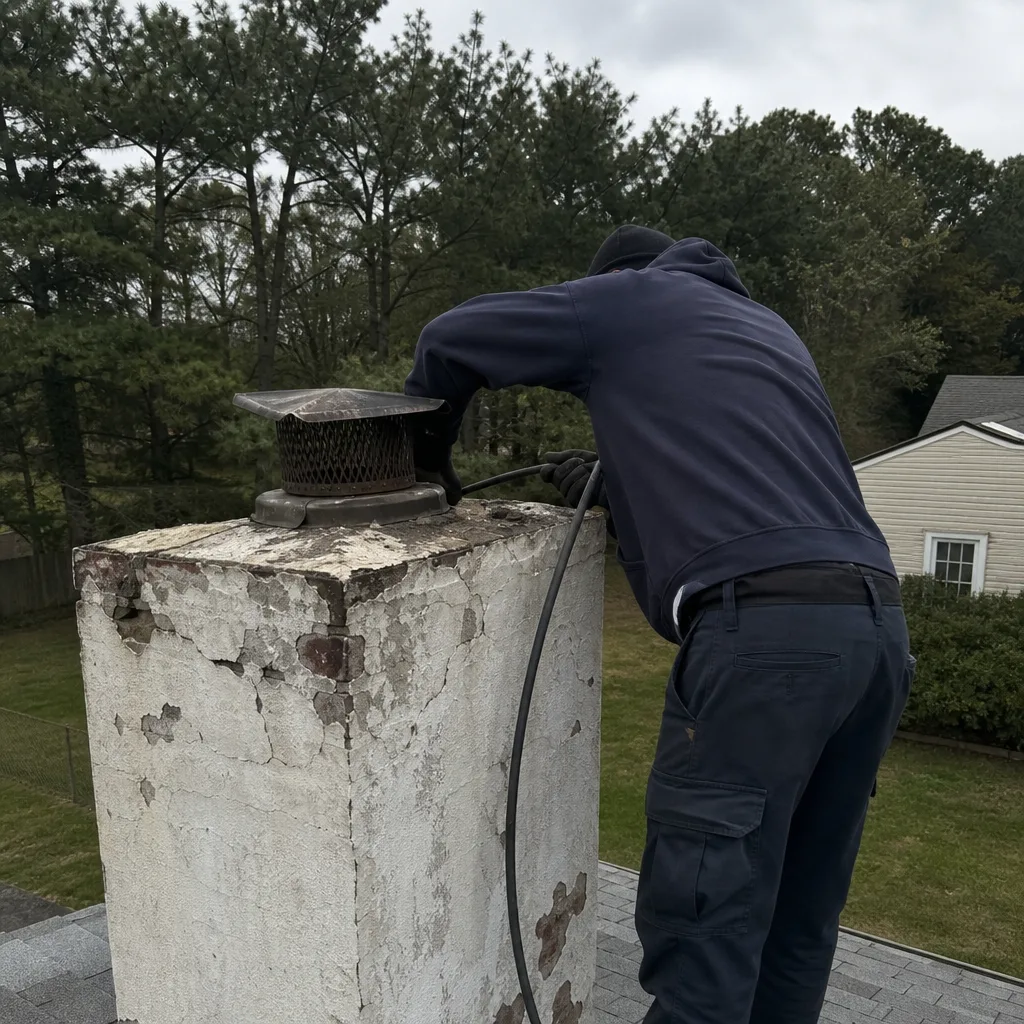 Before
 After
AfterAnnual Sweep in Brick, NJ
An annual Chimney Cleaning & Sweep removes the creosote, soot, and debris that accumulate every burning season – keeping your flue clear, your fireplace drawing properly, and your home safe from chimney fires. Most Brick homeowners who use their fireplace or wood stove regularly need one sweep per year, ideally in late summer or early fall before the first fire of the season. At Hearthstone Chimney Co., we’ve been doing this work since 1984, and Russell Haines built this company on one standard: the job is done right, or we come back and do it right – in writing, no arguing.
If you’d like to schedule or just want to talk through what your chimney needs, call us at (609) 657-3371. A live person picks up every call, around the clock. You can also read more about the full range of services we offer on our Chimney Cleaning & Sweep in Brick page.
Brick sits on the Barnegat Bay side of Ocean County, and the salt air here does things to masonry that homeowners in inland New Jersey don’t always see. Mortar joints soften faster. Metal components – dampers, smoke chambers, caps – corrode earlier than the manufacturer’s specs suggest. And because Brick winters run damp and raw from December through February, fireplaces get heavy use in a short window. That compressed burning season means creosote builds up faster than it would with lighter, more spread-out use. One full annual sweep, done before that window opens, keeps the buildup from reaching the stage where Creosote Removal becomes a real necessity.
When You Need an Annual Sweep
- You burned more than two cords of wood last season. Two cords is roughly the threshold where creosote moves from a light, brushable deposit to something thicker and harder to clear in a single pass. If you heated your home with wood through January and February, you almost certainly need a full sweep before you light the next fire.
- You’re noticing a smoky smell when the fireplace isn’t in use. Brick homes along the Metedeconk River watershed see this more than homeowners expect – humidity pulls old creosote odors down through the flue on warm, still days. A sweep clears the source; an air freshener doesn’t.
- It’s been more than 12 months since your last cleaning. The National Fire Protection Association’s Standard 211 calls for annual inspection and cleaning of chimneys in active use. If you can’t remember the last time someone was on your roof or inside your firebox, a year has probably passed.
- You’ve moved into an older home in Brick, Normandy Beach, or Silverton. Pre-1990 construction in Ocean County frequently used clay tile liners that chip and crack over decades of thermal cycling. A sweep combined with a Level-2 camera inspection tells you exactly what you’re working with before you use that fireplace for the first time.
- You see dark staining on the firebox walls or smell something sharp when the damper is open. That sharp, acrid smell is Stage 2 creosote – the tar-like form that ignites at lower temperatures and burns hotter than the chimney structure is rated for. This one shouldn’t wait.
- Birds or squirrels have been active around the chimney cap. Ocean County has a dense population of chimney swifts and starlings, and uncapped or damaged flues collect nesting material quickly. A single sparrow nest can block enough airflow to push carbon monoxide back into the living space. We remove the blockage, clear the debris, and check the cap at the same visit.
Our Annual Sweep Process
We don’t treat a sweep as a transaction. Every visit follows the same sequence because skipping a step is how problems get missed – and Russell Haines has been in this trade long enough to know that the problems you miss in September are the ones that wake someone up at 3 a.m. in January.
- Pre-sweep inspection of the firebox and damper. Before we touch a brush, we open the damper and look at what’s inside. We check the damper plate for corrosion, look at the smoke shelf for debris accumulation, and assess the firebox walls for cracking or spalling. In Brick’s salt-air environment, damper hardware corrodes faster than it does twenty miles inland – we’ve seen damper plates in homes near Barnegat Bay that were essentially rusted open after eight or ten years. If we find something during this step, we tell you plainly what it is before we go any further.
- Drop cloths and containment setup in the living area. Our technicians lay protective drop cloths over the hearth and the surrounding floor before any equipment comes in. We use a HEPA-filtered vacuum system to maintain negative pressure in the firebox so dust and soot don’t migrate into the room. Your home leaves looking the way it looked when we arrived.
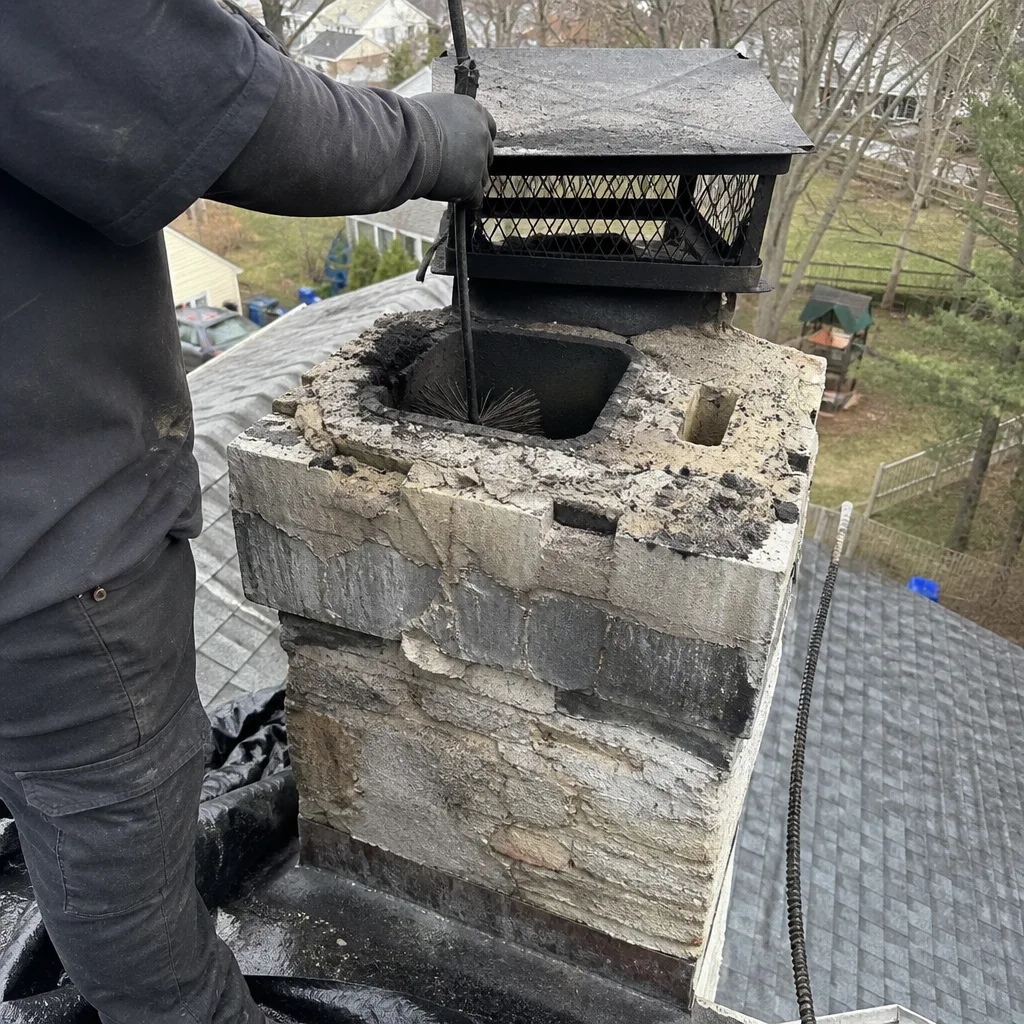
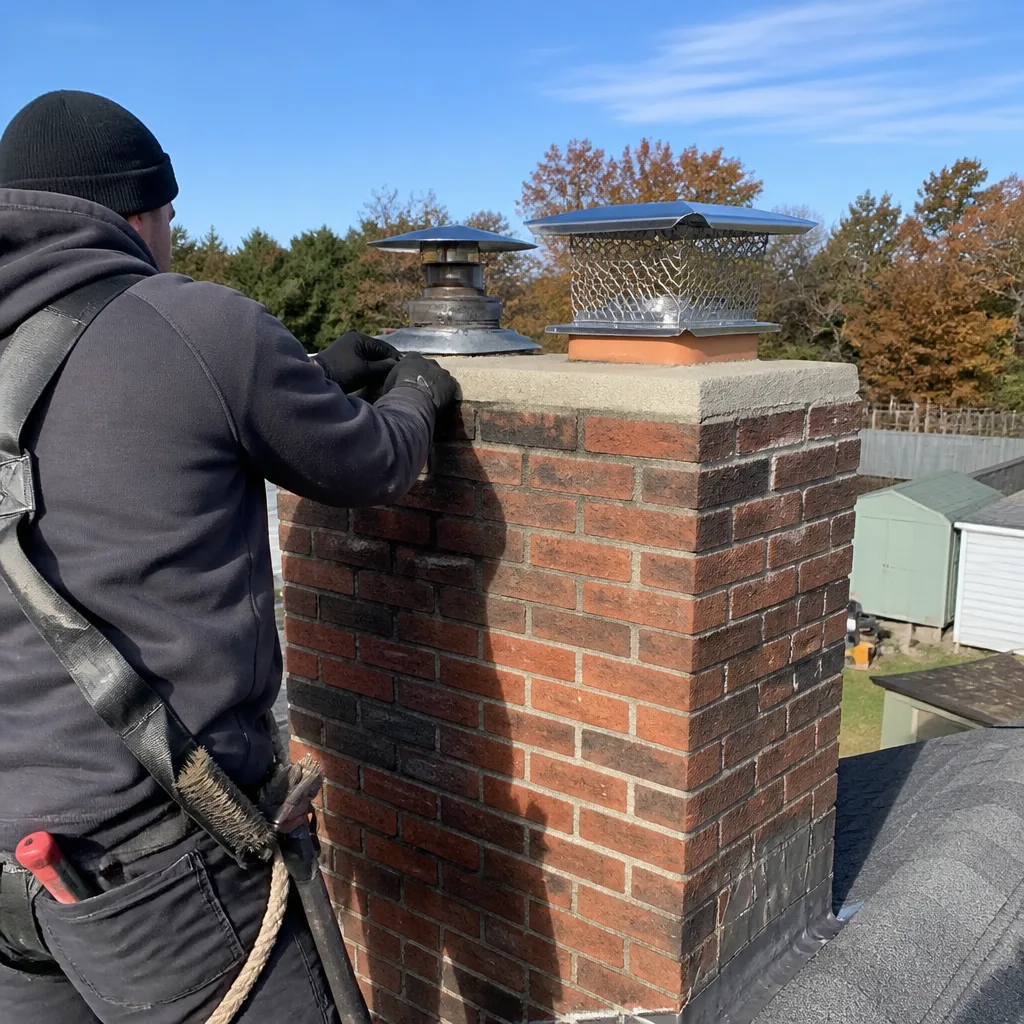
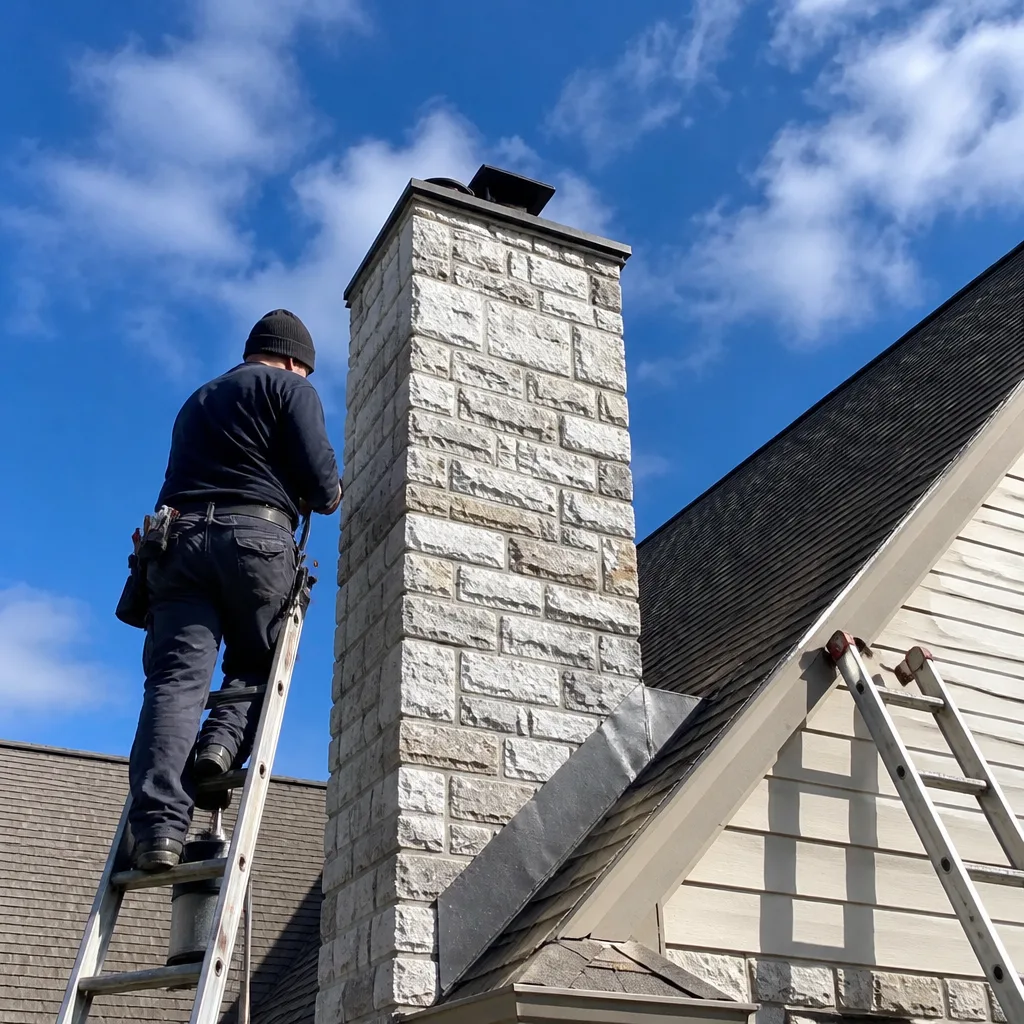
- Top-down brushing from the roof. We work from the top of the flue downward, using chimney brushes sized to your liner – round, oval, or rectangular depending on what’s in your home. For standard brick-and-mortar flues common in Brick’s mid-century construction, this means working through each clay tile section methodically. Creosote deposits are loosened from the flue walls and fall to the smoke shelf and firebox floor below.
- Vacuuming and removal of all debris. Once brushing is complete, we vacuum the smoke shelf and firebox floor thoroughly. The debris goes into sealed bags and leaves with us. Nothing stays behind, and nothing ends up on your hearth rug.
- Level-2 camera inspection of the flue interior. Every annual sweep at Hearthstone includes a camera pass through the full length of the liner. The camera captures the condition of every tile or liner section, any cracks or offsets, and the state of the flue crown at the top. You see the photos. We walk you through what they show in plain language – not technical jargon, not a sales pitch, just an honest read of what’s there and what, if anything, needs attention. If something needs repair, we give you the number upfront. The number on the estimate is the number on the invoice.
- Written summary and 90-Day Done Right Promise. Before we leave, you get a written summary of what was done and what was found. If we cleaned your flue and found everything in good order, that’s what the summary says. If we found a cracked tile, a deteriorated crown, or a corroded cap, that’s documented too – with photos you can keep. All work is backed by our 90-Day Done Right Promise: if it’s not right, we come back and make it right. That commitment is in writing, not just something we say at the door.
Annual Sweep Pricing in Brick
A standard annual chimney sweep in Brick, NJ runs between $149 and $299 for most residential fireplaces with a single-flue system – see our full guide on How Much Does Chimney Cleaning & Sweep Cost? (2026 Price Guide) - Brick, NJ for more details. The Level-2 camera inspection we include with every sweep is part of that price – not an add-on billed separately after the fact.
Several factors move the number within that range:
- Flue height and roof pitch. Most Brick homes are one- or two-story ranches and colonials with accessible roof pitches. Steep or high rooflines require additional safety equipment and take more time.
- Degree of creosote buildup. A light, first-stage deposit brushes away quickly. Stage 2 or Stage 3 buildup – the tar-like or glazed form – requires additional treatment and more time. If we find heavy buildup during the camera inspection, we’ll tell you before we start the additional work, not after.
- Liner type. Clay tile liners standard in older Brick construction sweep at the base rate. Stainless steel flexible liners – common in homes that converted from oil heat to wood or gas inserts – may require different brush sizing and slightly more time.
- Number of flues. Homes with two fireplaces or a fireplace plus a wood stove venting through separate flues are priced per flue.
We also offer an $89 Seasonal Tune-Up for homeowners who had a full sweep recently and want a lighter inspection and cleaning before the burning season. And if you’ve already received a written estimate from another company, we’ll give you a free second opinion – no charge, no obligation.
Seniors and veterans receive a permanent 5% discount on all services, and if your annual sweep uncovers a repair that runs over $250, you can apply our $50 Off Any Repair Over $250 offer at the same visit.
Call (609) 657-3371 for a free estimate. We’ll give you an honest number before we schedule anything.
What Makes Hearthstone Different in Brick
Brick has no shortage of chimney services – some local, some traveling down from Monmouth County or up from Atlantic County for the day – but if you’re searching for Chimney Cleaning & Sweep Near Me in Brick, NJ, Hearthstone stands apart. What separates Hearthstone is straightforward: we’ve been here since 1984, and Russell Haines runs this company knowing we’ll be here in thirty more years. That changes how we do the work.
We don’t use builder-grade materials. When a repair calls for a liner product, we use materials from brands like Olympia Chimney and Famco – companies that manufacture to professional-grade standards, not the lowest price point that holds together long enough to clear an inspection. When a job calls for a cap or a crown coat, we use products that last. There’s no reason to do the same job twice.
The camera inspection we include with every sweep isn’t a sales tool. It’s documentation. You get photos of your own flue – the real condition, not a description of it. If the tile is solid, the photo shows solid tile. If there’s a crack starting at the smoke chamber, the photo shows the crack. Our job is to tell you what’s there. Your job is to decide what to do about it, on your timeline, without pressure from us.
Our technicians are background-checked, uniformed, and arrive when we say they’ll arrive. Most jobs in Brick are complete in a single visit. We don’t schedule a sweep and then discover halfway through that we need to come back for the inspection – the inspection is part of the sweep.
FAQs – Annual Sweep in Brick, NJ
How often does a chimney need to be swept in Brick, NJ?
For a fireplace in regular use – typically three or more fires per week during the burning season – once per year is the right interval, and the Chimney Safety Institute of America agrees. Brick’s compressed winter burning season means some households accumulate more creosote in four months than others do in a full year. If you’re burning wet or unseasoned wood, or you’ve been using your fireplace as a primary heat source, you may need a sweep mid-season as well. When in doubt, call us at (609) 657-3371 and we’ll help you figure out the right schedule for your situation – no charge for the conversation.
Is it better to sweep in the fall or the spring?
Fall, before the burning season, is the standard recommendation, and it’s what we suggest for most Brick homeowners. A fall sweep means you go into winter with a clean flue and a fresh inspection – if there’s a problem with the liner or the cap, you find out in September, not in December when demand for repairs is higher and scheduling is tighter. That said, a spring sweep has value too if you burned heavy through February: it gets the creosote out before warm weather drives the odor into the living space, and it gives you the full summer to schedule any repairs that turn up. Either is better than neither. Call (609) 657-3371 and we’ll book whichever window works for your schedule.
Can I sweep my own chimney, and what are the risks?
Chimney brush kits are sold at hardware stores, and some homeowners use them for light maintenance. But a DIY brush pass from the firebox doesn’t reach the full flue, doesn’t include a camera inspection of the liner, and doesn’t catch the cracks, offsets, or deteriorated tile that cause the real problems. More to the point: working on or near a chimney from the roof carries genuine fall risk, and disturbing heavy creosote deposits without proper containment can push soot and fine particles through the living space. For light, first-season deposits on an otherwise known-good chimney, a DIY brush can stretch the interval. For anything beyond that – and certainly before you rely on a fireplace you haven’t had professionally inspected in over a year – a trained sweep is the safer call.
What happens if the camera inspection finds a cracked liner?
We document it with photos and explain exactly what you’re looking at and what it means for safe operation. Minor hairline cracks in clay tile liners are common in Ocean County homes built before 1980 and are often repairable with a product like HeatShield without full liner replacement. More significant damage – offset tiles, large fractures, or sections that have collapsed – typically calls for a stainless steel liner. We give you the scope and the price in writing before any repair work begins. You decide how to proceed. There’s no pressure, no urgency language, just the facts and the number. If you want a second opinion on the repair estimate, we’ll tell you exactly who else in the area does solid work – that’s how confident we are in our own assessment.
If your fireplace hasn’t been swept in the past year – or if you’re not sure when it was last done – call Hearthstone Chimney Co. at (609) 657-3371. We’ll schedule a time that works, send a uniformed technician who’ll walk you through the inspection findings on the spot, and leave you with a written record of everything found and everything done. No surprises on the bill. If something isn’t right, we come back. That’s the 90-Day Done Right Promise, and it’s in writing.
Written by Russell Haines, Owner at Hearthstone Chimney Co., serving Brick since 1984.